
Most organizations find out their supervisors weren’t ready the same way — during the crisis, when it’s too late to fix it. The team leader who handles daily operations well suddenly has no clear authority to make calls, no practiced decision framework, and no training that prepared them for conditions this different from normal. That gap isn’t a supervision problem. It’s a structure problem.
Frontline supervisor crisis leadership training tends to get treated as a checklist exercise — run a drill, distribute the plan, check the box. But checklists describe what to do when conditions are predictable. Crises, by definition, aren’t.
This article gives operations leaders and agency HR directors a concrete way to diagnose the gap, understand what structured preparation actually requires, and build the leadership capacity that keeps mission-critical functions running when conditions deteriorate. The goal is readiness before the disruption arrives — not recovery after it.
Why Checklists Fail When the Crisis Actually Hits
A checklist is a promise made under calm conditions. It assumes the right people are available, communications are functional, and the situation unfolds in a sequence someone anticipated. Crises break all three assumptions inside the first hour.
When conditions collapse, frontline supervisors don’t reach for a binder. They revert to habit — whatever behavior got reinforced during normal operations. If those habits were built around compliance and escalation, that’s what you get: supervisors waiting for direction no one has time to give.
Cognitive overload accelerates the problem. Under stress, the brain narrows. People default to familiar patterns even when those patterns don’t fit the situation in front of them. A detailed protocol handed down from leadership becomes background noise the moment the situation deviates from what the protocol assumed.
What actually holds under pressure
Pre-built crisis decision frameworks survive where checklists don’t because they address authority, not just sequence. They answer three questions a supervisor needs answered before the disruption arrives:
- What decisions can I make without approval?
- What do I protect first when resources are constrained?
- Who do I communicate with, and in what order?
Frontline supervisor crisis leadership training built around these questions produces something a checklist never can — judgment that transfers across scenarios. The goal isn’t a supervisor who follows steps. It’s a supervisor who can read a situation they’ve never seen and act with appropriate authority.
The Leadership Gap No One Sees Until It’s Too Late
Frontline supervisors are the closest people to a disruption when it happens. They are managing the staff, fielding the questions, and making real-time calls before any executive gets the notification. Yet in most organizations, they are also the least prepared to do any of that well under pressure.
The reason is structural. Most crisis training focuses on two levels: the policy documents that senior leaders produce and the procedural checklists handed to individual contributors. The middle layer — the judgment required to translate policy into action in a fluid situation — gets skipped entirely. Supervisors are left to improvise that translation on their own, in the worst possible conditions.
What fills the gap when training doesn’t
When there is no structured framework for supervisor decision-making, three things tend to happen:
- Supervisors escalate decisions upward that they should own, creating bottlenecks at the leadership level.
- They apply checklist logic to situations the checklist wasn’t designed for.
- Mission-critical functions slow down or stop while people wait for clarity that isn’t coming.
The supervisor leadership gap is not a personnel problem. It is an organizational readiness problem — one that rarely surfaces in normal operations. It shows up the first time conditions are abnormal and the decision-making structure hasn’t been built to hold.
Effective leadership development & training addresses this before the disruption tests it.
Building Decision Authority Before the Disruption Arrives
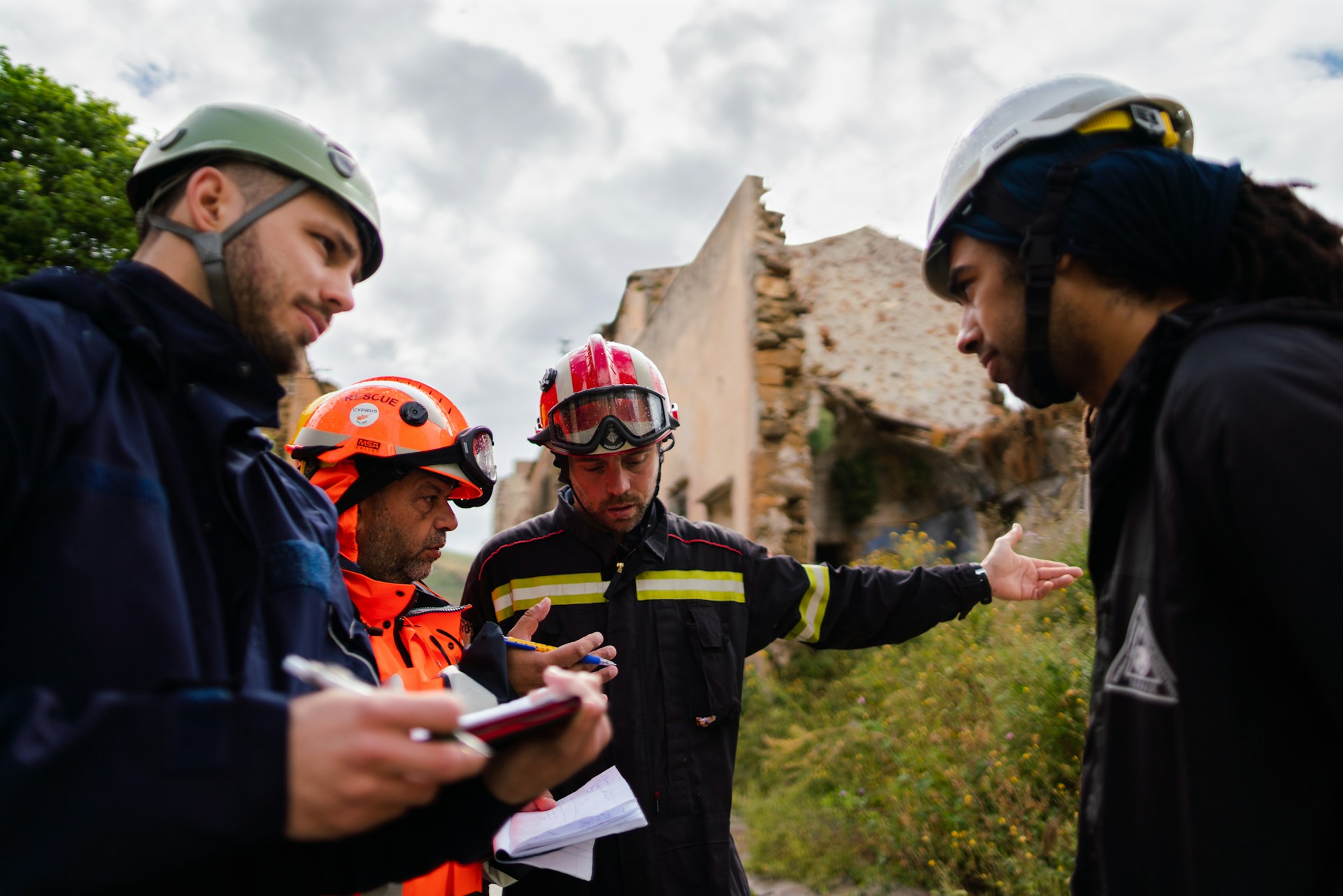
Most organizations treat authority as something that flows downward in a crisis — approved in the moment, case by case, as senior leaders assess what’s happening. That model collapses under pressure. When communication channels degrade and decision cycles compress, waiting for approval is itself a failure mode.
The fix is pre-delegation, and it has to happen before the disruption arrives.
Start by mapping the decisions that actually occur at the operational tier during a disruption: staff reallocation, service continuity calls, vendor escalations, public-facing communications at the unit level. For each category, define clearly which decisions supervisors own outright, which require notification without prior approval, and which genuinely need escalation. That distinction — written, not assumed — is the foundation of effective frontline supervisor crisis leadership training.
Three elements every pre-delegation framework needs:
- Defined scope. Supervisors need explicit authority over specific decision types, not vague encouragement to “use judgment.”
- Clear thresholds. Set the conditions — resource levels, timeline triggers, impact ceilings — that determine when a supervisor acts versus when they escalate.
- Documentation supervisors can reference under stress. Authority that exists only in a policy manual no one has read provides no operational continuity when it matters.
Done correctly, this isn’t a bureaucratic exercise. It’s the structure that allows a mid-level supervisor to act decisively at 2 a.m. without waiting for a director to respond to a text.
What Structured Leadership Development Actually Looks Like
Most organizations treat supervisor preparation as a one-time event — a workshop, a manual, a sign-off sheet. That approach doesn’t hold under operational stress. Durable frontline supervisor crisis leadership training is built through repeated practice, honest feedback, and deliberate alignment to mission requirements.
Scenario-based exercises do the work checklists never can. When supervisors work through realistic disruption scenarios — a key system goes down, a team member is unreachable, directives from above conflict with conditions on the ground — judgment gaps surface quickly. Those gaps don’t show up in a compliance review. They show up when a supervisor freezes, escalates something they should own, or makes a unilateral call without the authority or information to back it up. Exercises create the conditions to identify and correct those patterns before they cost the mission.
Coaching builds on that foundation. Under sustained pressure, supervisors who lack self-awareness tend to default to control — micromanaging teams, avoiding hard decisions, or communicating poorly upward. Leadership development & training paired with structured executive coaching develops the habits supervisors need to stay grounded and lead clearly when conditions are unstable.
Custom management training takes it further by anchoring leadership behaviors to your specific operating environment. General leadership content doesn’t account for your chain of command, your mission constraints, or your workforce’s particular dynamics. Workforce development designed around your requirements closes that gap. That’s where preparation becomes capability.
Connecting Supervisor Readiness to Continuity of Operations
Most COOP plans are built around functions, not people. They document which systems must stay operational, which processes take priority, and which locations serve as alternates. What they rarely document is who actually has the authority to make decisions when the designated lead is unavailable and conditions on the ground don’t match the plan.
That gap lives at the supervisor level.
A continuity plan assumes that someone in the middle of your organization can read the situation, make a call, and keep the mission moving. That assumption is either true or it isn’t — and most organizations find out which on the worst possible day.
The Human Layer Your Plan Depends On
Frontline supervisor crisis leadership training isn’t a supplement to COOP planning. It’s the mechanism that makes COOP planning executable. Supervisors need to know, before any disruption occurs:
- Which decisions they are authorized to make without escalation
- Who they report to when the normal chain of command is disrupted
- What mission-critical functions fall within their span of control
- How to communicate status up and direction down under degraded conditions
Aligning leadership structures to COOP roles before a crisis is design work, not training work. It means assigning authority explicitly, not by assumption, and building the decision frameworks that let supervisors act with confidence when the plan meets reality.
Organizations that do this work ahead of time don’t just survive disruptions. They execute through them.
How to Assess Whether Your Supervisors Are Actually Ready
Most organizations assume readiness. Structured assessment is how you verify it.
The gap between what leadership believes supervisors can do and what supervisors can actually do under pressure is often significant — and invisible until a disruption exposes it. A supervisor readiness assessment replaces assumption with evidence. It surfaces which individuals can operate autonomously, which ones need decision-support scaffolding, and which gaps require immediate development before those gaps become operational failures.
SLV Consulting has delivered more than 2,000 assessments across organizations, and the pattern holds: the supervisors who look ready on paper are not always the ones who hold the line when conditions change. Credentials and tenure don’t predict crisis performance. Structured evaluation does.
Assessments also solve a consistency problem. When supervisors are distributed across sites, shifts, or divisions, organizational alignment requires a common baseline — not a common assumption. Baselining capability across leadership tiers lets you see where performance is strong, where it’s concentrated in a few individuals, and where the organization is one departure away from a coverage gap.
That data has a direct application. Rather than scheduling the same training for everyone, targeted development addresses the specific deficits the assessment identifies. Frontline supervisor crisis leadership training works best when it’s built around what people actually need, not what the organization assumes they lack.
Assessment is not a one-time exercise. Build it into your leadership review cycle and you stop discovering gaps in the middle of a crisis.
Frequently asked questions
How do you train supervisors to make decisions during a crisis?
Supervisors need pre-built decision frameworks, not just procedures. Training should practice authority boundaries, escalation triggers, and resource prioritization under pressure — before a crisis forces the question. SLV Consulting builds those frameworks into supervisor development so decisions default to structure, not instinct.
What is frontline supervisor crisis leadership training?
It is structured preparation that gives mid-level leaders defined roles, clear decision authority, and practiced judgment for disruption scenarios. The goal is removing ambiguity — supervisors should know exactly what they own when normal chains of command compress or break down. That clarity is built in training, not discovered during an incident.
How does COOP planning account for mid-level leadership gaps?
Most COOP plans document essential functions but skip the question of who leads them when senior officials are unavailable. Effective continuity planning maps succession two and three levels deep, assigns authority explicitly, and tests whether supervisors at each tier can actually execute — not just whether a name appears in a document.
What is the difference between emergency response training and leadership readiness?
Emergency response training covers procedures and protocols after a disruption begins. Leadership readiness addresses whether the organizational structure, decision frameworks, and people are capable before it does. One is reactive. The other is the condition that determines how well the reactive phase actually performs.
Where to go from here
The gap between a supervisor who follows a checklist and one who leads through a crisis is not trained in the moment — it is built well before one. The decision you make about your supervisors’ readiness now is the same decision that determines whether your operations hold when conditions change fast and support is unavailable.
SLV Consulting works with government agencies, corporations, and mission-driven organizations to close that gap before it becomes a liability. If you want to assess whether your frontline supervisors are actually prepared to lead through a crisis, start there.
Schedule a conversation with our team or visit slvconsulting.biz to learn how we build leadership structures that hold.